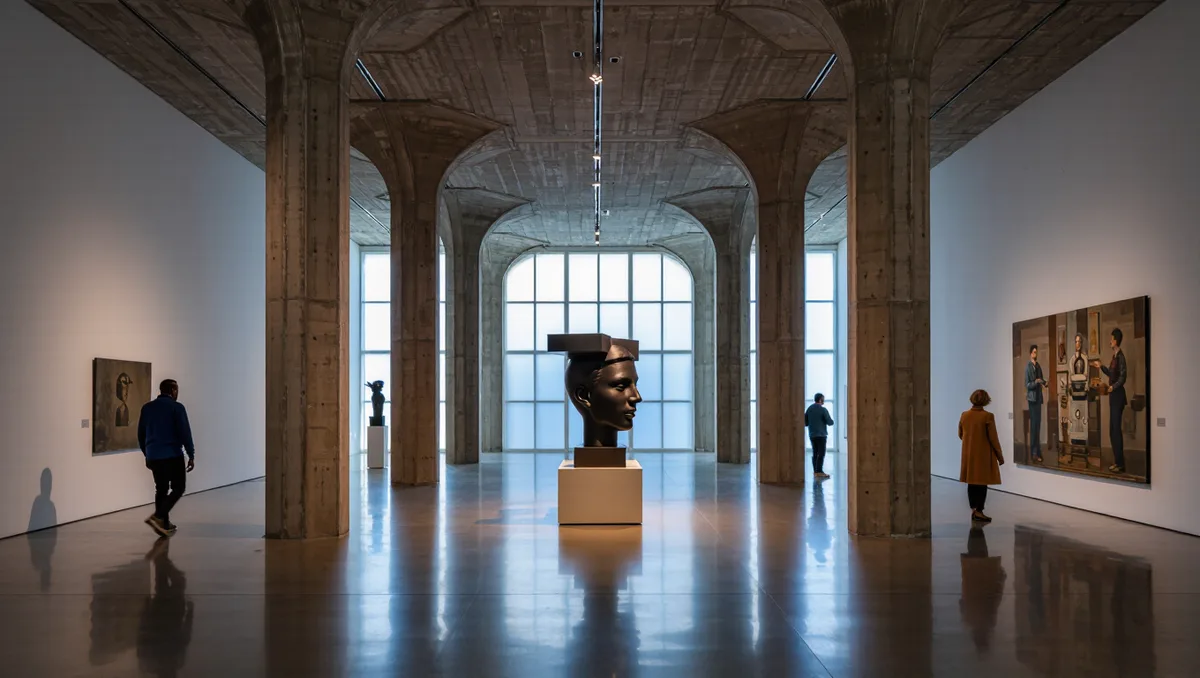
The Untitled Art Fair returns to the George R. Brown Convention Center from Friday, October 2 through Sunday, October 4, and the numbers tell most of the story. According to CultureMap Houston, this second Houston edition brings 98 galleries from 20 countries and territories, an expanded roster following the fair's Houston premiere last fall.
What distinguishes the fair, the report argues, is not scale but proportion. Untitled specializes in international contemporary art aimed at both casual admirers and collectors, yet it is, by CultureMap's accounting, arguably the only fair of its magnitude that also platforms local artists, foundations, charities, and non-profit organizations. Houston is not the garnish on an international menu; it is written into the programming. Readers following this should also see How to make the most of an outdoor art festival, from a small one that got it right.
How much of the fair is actually Houston?
The local share is measurable. Eleven Special Projects across the show floor give artists, galleries, and institutional partners room for site-specific work alongside the booth exhibitors, and a large cluster of them is Houston-specific. The Houston Artist Market, curated by Adam Marnie — editor of F Magazine and a Nest exhibitor at the fair — returns for its second year with 12 presentations, including two collaborative booths, and has widened its scope beyond the city to artist-run organizations across Texas.
Marnie's own framing, quoted by CultureMap, puts the emphasis on infrastructure rather than sales: the Artist Market represents "a vital collection of the artist-run organizations creating community and connection on the ground in Greater Houston and beyond."
Which Houston artists should a visitor look for?
The Houston-specific projects read like a cross-section of the city's art ecology, spanning estates, commercial galleries, and museums:
- Floyd Newsum Jr. — The Floyd Newsum Jr. Art Estate expands The Journey Never Ends, a 2005 painting by the late artist, with a living "artchive" tracing his four-decade influence on generations of Houstonians. It unfolds in three acts, including a live video feed, Untitled Voyage (2026), linking a traveling iteration of the project to its fair presentation.
- Nick Vaughan and Jake Margolin — Town Meeting 1978–2028 (2026), exhibited by McClain Gallery, is a monumental drawing and performance lecture reconstructing historical LGBTQIA+ spaces and queer community sites in Houston.
- Reynier Leyva Novo — Blue Bones (2026), presented by PAC Public, is a public art project in the Third Ward. Novo covers images and objects in blue paint, recasting them as material evidence of survival, loss, and urban change in the neighborhood.
- Nestor Topchy — In The Iconic Portrait Strand (Houston), a portrait series running from 2008 to 2026, Topchy renders egg-tempera and gold-leaf portraits of Houstonians in the tradition of Byzantine icons. Presented with Josh Pazda Hiram Butler, it grows during the fair through live portrait sittings.
- Estafania Puerta — The Crowd (2026), a reflective figurative sculpture built from cast forms and photographs taken in Rome and Colombia, is presented by the Contemporary Arts Museum Houston as part of the inaugural CAMH Commission Prize, awarded to the artist at the fair's first Houston edition.
- JooYoung Choi — Inman Gallery showcases WE CAN MAKE IT IF WE TRY, The Journey of Poundcake Man and Emma Poundcake Girl (2024), a sculptural installation drawing on the artist's childhood memories and themes of identity, belonging, trauma, and resilience.
- Mark Flood — Daily Flood (2026) stages a lived-in artist's studio and private viewing room, with paintings stacked on the floor, leaned against walls, and set among furniture and found objects.
What is on the floor beyond the Houston projects?
The visiting highlights carry their own weight. Dave Muller's Record Pavilion 2.0 (2026), presented by Meliksetian | Briggs and the Landing, is a fully operational, walk-in record store assembled from the artist's own collection — sound system, paintings, and ephemera included — and first staged in Los Angeles in 2022. Erina Libertad's Duet (2026), with Main sector exhibitor Hannah Sloan, turns a stretch of the fair into an invitation for an impromptu dance between strangers. Josh Callaghan's Big Rig (2026), exhibited by Night Gallery, a new Main sector gallery, recasts wheelchairs as icons of American mobility. And at SAGE Studio & Gallery, densely layered, kaleidoscopic paintings inspired by King Nobuyoshi Godwin's "synaesthesia" appear in The Artist Is Having a Good Day (2026).
Why the local numbers matter
Fairs are usually measured by their international draw, and the 98-gallery, 20-country roster is the headline figure here. But the more telling comparison sits in the repeat appearances: the Artist Market is back for a second year and has expanded, the CAMH Commission Prize carries over from the inaugural edition, and the estate of a Houston painter with four decades of local influence anchors the Special Projects. A fair that returns and deepens its local commitments is making a different kind of argument than one that simply grows.
For readers who track how cities build their own art infrastructure, the Houston model — a retail-style platform for artist-run organizations set beside an international roster — is worth watching. New York's fair calendar works differently, and the mechanics of how galleries take on artists in the first place are covered in our guide to how artist gallery representation works. For anyone planning fair-going closer to home, our events calendar and exhibitions listings cover the current season.
The evidence establishes what is on view and who is presenting it. What it does not establish is attendance, sales, or how the second edition compares commercially to the first — those questions remain open until the fair closes on Sunday, October 4.